Past future perfect tense in english.
Jika kamu sedang mencari artikel past future perfect tense in english terbaru, berarti kamu telah berada di blog yang benar. Yuk langsung aja kita simak penjelasan past future perfect tense in english berikut ini.
 Past Participle Domino worksheet Free ESL printable From en.islcollective.com
Is formed with subject + will have + past participle of verb.
Past participles usually end in. These three verb tenses are past perfect tense, present perfect tense, and future perfect tense. Verb, past participle, tense, preposition. Ad improve grammar, word choice, and sentence structure in your essays instantly. Will have + [past participle] the subject of your sentence, whether singular or plural, does not matter.
 Source: englishlearnsite.com
Perfect for all kinds of personal and professional writing. The future perfect tense in english grammar indicates that an action will have been completed by a certain future time. These three verb tenses are past perfect tense, present perfect tense, and future perfect tense. Is formed with subject + will have + past participle of verb. To sum up, the future perfect tense:
The future perfect tense expresses action in the future before another action in the future.
The future perfect tense is used to indicate a future event that has a definitive end date. Had the water boiled when you went to kitchen? As for future time, it’s natural to refer to “i will see you tomorrow” as future tense, even though. The formula for the future perfect tense.
Source: en.islcollective.com
Definition of past future perfect (entry 1 of 2) : Perfect tenses can appear in any of the three forms: These three verb tenses are past perfect tense, present perfect tense, and future perfect tense. Perfect for all kinds of personal and professional writing.
 Source: pinterest.com
The train will leave the station at 9am. As for future time, it’s natural to refer to “i will see you tomorrow” as future tense, even though. Here's how to make it. Definition of past future perfect (entry 1 of 2) :
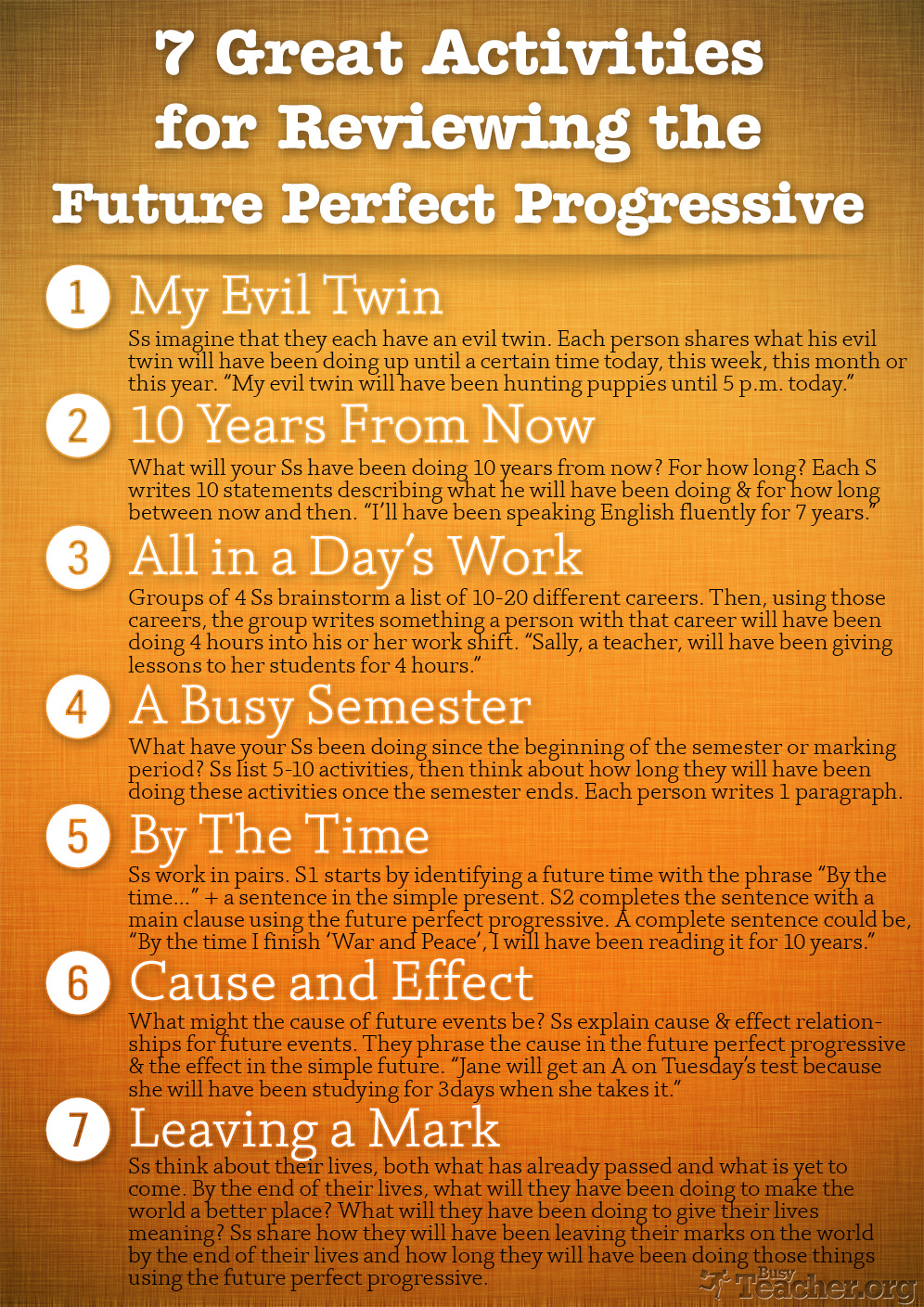 Source: busyteacher.org
Expresses actions that occur in the. Ad improve grammar, word choice, and sentence structure in your essays instantly. The train will leave the station at 9am. Had the water boiled when you went to kitchen?
Notice in this second example, “had” is inflected past tense, so this combination is “past perfect”.
Had the water boiled when you went to kitchen? This is the past in the future. The future perfect tense is only used in a few situations, but it's still good to know it. As is the case with every tense in english, each perfect. Perfect for all kinds of personal and professional writing.
Source: pinterest.com
The future perfect tense in english grammar indicates that an action will have been completed by a certain future time. The tenses simply show the time of an action. Click here to learn about how to use this tense. Of, relating to, or constituting a verb tense that is traditionally formed in english with would have or should have and denotes an action or state. For example, “shannon will have.
Past participles usually end in.
The formula for this tense is quite simple: As for future time, it’s natural to refer to “i will see you tomorrow” as future tense, even though. Present perfect tense expresses began in the past and is now completed in the present. Is formed with subject + will have + past participle of verb.
Source: en.islcollective.com
Using future perfect tense, definitions and examples. Click here to learn about how to use this tense. 10 sentences of past perfect tense. As for future time, it’s natural to refer to “i will see you tomorrow” as future tense, even though.
 Source: in.pinterest.com
Expresses actions that will be finished at some point. Definition of past future perfect (entry 1 of 2) : Click here to learn about how to use this tense. Expresses actions that will be finished at some point.
 Source: pinterest.de
Using future perfect tense, definitions and examples. A past participle, in the context we’re using it today, is the second part of a compound verb that’s used to form perfect and passive tenses. Verb, past participle, tense, preposition. The future perfect tense can be used in the positive form or negative form.
To sum up, the future perfect tense:
The train will leave the station at 9am. Present perfect tense expresses began in the past and is now completed in the present. The past perfect tense, the present perfect tense, and the future perfect tense. Of, relating to, or constituting a verb tense that is traditionally formed in english with would have or should have and denotes an action or state. Ad improve grammar, word choice, and sentence structure in your essays instantly.
Source: pinterest.de
10 sentences of past perfect tense. The train will leave the station at 9am. To sum up, the future perfect tense: The past perfect tense in a sentence or conversation describes an event that happened in the past before another event in the simple past tense was completed in the past. These three verb tenses are past perfect tense, present perfect tense, and future perfect tense.
For example, “shannon will have.
Expresses actions that occur in the. Click here to learn about how to use this tense. Here's how to make it. Expresses actions that will be finished at some point.
Source: in.pinterest.com
As is the case with every tense in english, each perfect. Of, relating to, or constituting a verb tense that is traditionally formed in english with would have or should have and denotes an action or state. Notice in this second example, “had” is inflected past tense, so this combination is “past perfect”. Form future perfect with be going to [am/is/are + going to have + past participle]
Source: pinterest.de
The future perfect tense expresses action in the future before another action in the future. The future perfect tense is used to indicate a future event that has a definitive end date. The future perfect tense in english grammar indicates that an action will have been completed by a certain future time. Had the water boiled when you went to kitchen?
Source: busyteacher.org
A past participle, in the context we’re using it today, is the second part of a compound verb that’s used to form perfect and passive tenses. Past participles usually end in. Present perfect tense expresses began in the past and is now completed in the present. Follow the list for detailed expressions;
The future perfect tense is only used in a few situations, but it's still good to know it.
The past perfect tense, the present perfect tense, and the future perfect tense. The future perfect tense can be used in the positive form or negative form. Click here to learn about how to use this tense. The past perfect tense, the present perfect tense, and the future perfect tense. The future perfect tense expresses action in the future before another action in the future.
Source: pinterest.com
Using future perfect tense, definitions and examples. For example, “shannon will have. As for future time, it’s natural to refer to “i will see you tomorrow” as future tense, even though. Expresses actions that occur in the. As is the case with every tense in english, each perfect.
Had the water boiled when you went to kitchen?
The future perfect tense in english grammar indicates that an action will have been completed by a certain future time. These three verb tenses are past perfect tense, present perfect tense, and future perfect tense. Past participles usually end in. To sum up, the future perfect tense:
Source: englishlearnsite.com
The future perfect tense can be used in the positive form or negative form. The future perfect tense can be used in the positive form or negative form. The future perfect tense is only used in a few situations, but it's still good to know it. It is constructed with the auxiliary verbs will + have + past. 10 sentences of past perfect tense.
Source: pinterest.de
Expresses actions that occur in the. To sum up, the future perfect tense: 3.by the time i returned home, he had already left. Click here to learn about how to use this tense. Had the water boiled when you went to kitchen?
Source: busyteacher.org
Past participles usually end in. Definition of past future perfect (entry 1 of 2) : This is the past in the future. The future perfect tense in english grammar indicates that an action will have been completed by a certain future time. Will have + [past participle] the subject of your sentence, whether singular or plural, does not matter.
Situs ini adalah komunitas terbuka bagi pengguna untuk berbagi apa yang mereka cari di internet, semua konten atau gambar di situs web ini hanya untuk penggunaan pribadi, sangat dilarang untuk menggunakan artikel ini untuk tujuan komersial, jika Anda adalah penulisnya dan menemukan gambar ini dibagikan tanpa izin Anda, silakan ajukan laporan DMCA kepada Kami.
Jika Anda menemukan situs ini lengkap, tolong dukung kami dengan membagikan postingan ini ke akun media sosial seperti Facebook, Instagram dan sebagainya atau bisa juga simpan halaman blog ini dengan judul past future perfect tense in english dengan menggunakan Ctrl + D untuk perangkat laptop dengan sistem operasi Windows atau Command + D untuk laptop dengan sistem operasi Apple. Jika Anda menggunakan smartphone, Anda juga dapat menggunakan menu laci dari browser yang Anda gunakan. Baik itu sistem operasi Windows, Mac, iOS, atau Android, Anda tetap dapat menandai situs web ini.