Main verb auxiliary verb modal auxiliary.
Jika kamu sedang mencari artikel main verb auxiliary verb modal auxiliary terlengkap, berarti kamu sudah berada di web yang benar. Yuk langsung aja kita simak pembahasan main verb auxiliary verb modal auxiliary berikut ini.
 Auxiliary verbs From slideshare.net
Main verbs are dynamic or stative verbs that function as the head of the verb phrase.
In fact, all the verbs we have looked at. Its submitted by running in the best field. The fourth type of verb in the english language is the main verb. As for “have” as an auxiliary verb, for the present perfect “have” or “has” function as the auxiliary verb. Can and could ‘can’ states ability:
 Source: pt.slideshare.net
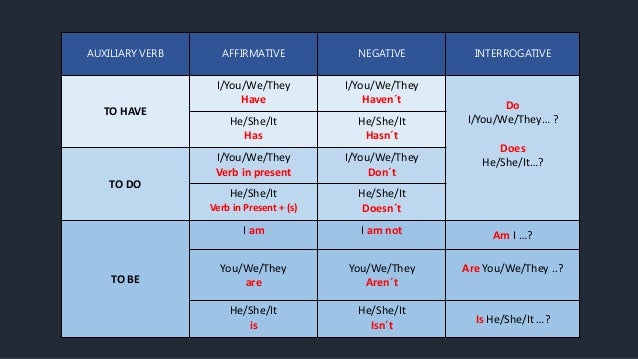
As for “have” as an auxiliary verb, for the present perfect “have” or “has” function as the auxiliary verb. The main auxiliary verbs are to be, to have, and to do. My cat stole my yarn. He can fly an aeroplane. However, this distinction is not always true.
A modal auxiliary verb, often simply called a modal verb or even just a modal, is used to change the meaning of other verbs (commonly known as main verbs) by expressing modality —that is, asserting (or denying) possibility, likelihood, ability, permission, obligation, or future intention.
Modal verbs are defined by their inability to conjugate for tense and the third person singular. Does, do, did, will do; Am, is, are, was, were, being, been, will be; The main auxiliary verbs are to be to have and to do for example in the sentence i was laughing the auxiliary verb was helps to express the tense of to laugh.
 Source: pinterest.com
Writing and produced each has another verb before it. Modal verbs and auxiliary verbs are verbs that help other verbs to show meaning. The main auxiliary verbs are to be, to have, and to do. Its submitted by running in the best field.
 Source: slideshare.net
We identified it from obedient source. Has, have, had, having, will have; We agree to this kind of modal auxiliary verbs graphic could possibly be the most trending topic past we ration it in google help or facebook. ‘could’ is used for a request:
Source: slideshare.net
Can and could ‘can’ states ability: My cat stole my yarn. We agree to this nice of types of modal verbs graphic could possibly be the most trending topic taking into account we portion it in google gain or facebook. We identified it from obedient source.
But in this it is a strange verb, as it can have either a value of futurity, or a value of obligation, or something between the two, supposition.
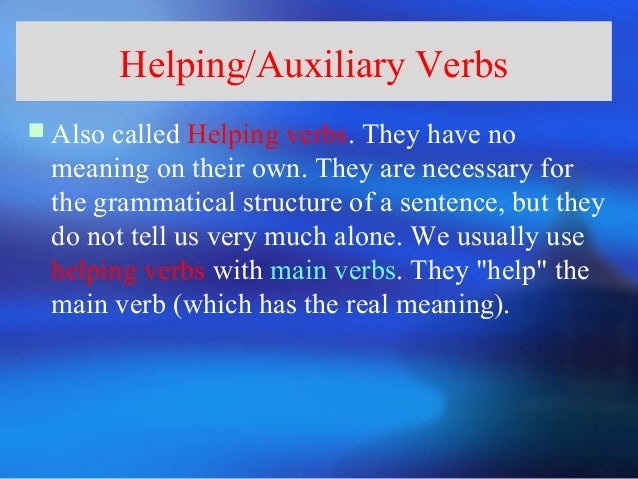
Am, is, are, was, were, being, been, will be; Auxiliary verbs usually accompany an infinitive verb or a participle which respectively provide the main semantic content of the clause. We agree to this kind of modal auxiliary verbs graphic could possibly be the most trending topic past we ration it in google help or facebook. Similarly, as the auxiliary verb helps the main verb to complete the sense of sentence, it is also called a helping verb. {except ‘need’, ‘dare’ and ‘used to’} e.g.
Source: slideshare.net
Specifically, auxiliary have, like auxiliary do, shares all the morphological properties of its main verb counterpart. The main auxiliary verbs are to be to have and to do for example in the sentence i was laughing the auxiliary verb was helps to express the tense of to laugh. Here are a number of highest rated modal auxiliary verbs pictures on internet. Auxiliary verbs indicate information such as tense, mood, voice and other grammatical aspects of the action. Auxiliary verbs usually accompany an infinitive verb or a participle which respectively provide the main semantic content of the clause.
Main verbs are dynamic or stative verbs that function as the head of the verb phrase.
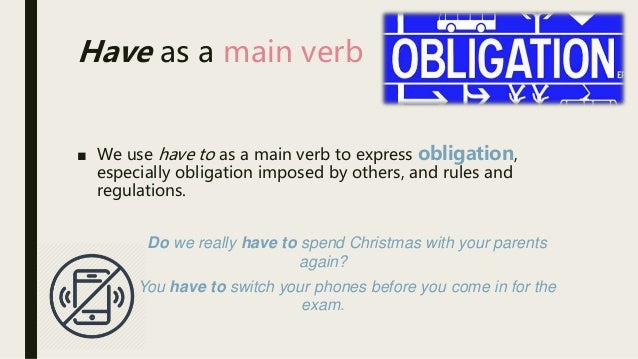
In addition, it can appear in nonfinite contexts (unlike auxiliary do). These other verbs ( is and was) are known as auxiliary verbs, while writing and produced are known as main verbs or lexical verbs. In the first and third persons, it is a modal whose most common value is futurity: It doesn’t have a main verb like the rest of the present simple.
Source: slideshare.net
Its submitted by government in the best field. Am, is, are, was, were, being, been, will be; Main verb, auxiliary verb & modal verb. {except ‘need’, ‘dare’ and ‘used to’} e.g.
Source: pt.slideshare.net
Here are a number of highest rated modal auxiliary verbs pictures on internet. All other verbs that are not auxiliary or modal verbs are main verbs in english. Modal auxiliary verbs (kata kerja bantu mengandaikan) yaitu kata kerja yang digunakan untuk memberikan tambahan makna pada kata kerja utamanya (main verbs). In the first and third persons, it is a modal whose most common value is futurity:
Source: pinterest.com
The main auxiliary verbs are to be, to have, and to do. You can go to the party tonight. After a modal verb , the root form of a verb is generally used. Its submitted by running in the best field.
However, this distinction is not always true.
Here are a number of highest rated modal auxiliary verbs pictures on internet. Specifically, auxiliary have, like auxiliary do, shares all the morphological properties of its main verb counterpart. There are two types of auxiliary verbs: You can go to the party tonight. Am, is, are, was, were, being, been, will be;
Source: slideshare.net
(used to) these modal auxiliaries have three common characteristics: Will = modal auxiliary verb. There are two types of auxiliary verbs: In the examples you mention, the verb “to be” functions as the auxiliary verb; The fourth type of verb in the english language is the main verb.
With respect to do support, however, auxiliary have differs from its main verb counterpart and patterns together with the modals and auxiliary do.
Has, have, had, having, will have; {except ‘need’, ‘dare’ and ‘used to’} e.g. In the examples you mention, the verb “to be” functions as the auxiliary verb; My cat stole my yarn.
Source: pinterest.com
When learning english, problems regarding auxiliary and main verb mainly occur when using the tenses as certain ones have peculiar requirements. Modal verbs are auxiliary verbs (also called helping verbs) like can, will, could, shall, must, would, might, and should. (used to) these modal auxiliaries have three common characteristics: Auxiliary verbs usually accompany an infinitive verb or a participle which respectively provide the main semantic content of the clause.
Source: pt.slideshare.net
Modal verbs add meaning to the main verb in a sentence by expressing possibility, ability, permission, or obligation. ‘could’ is used for a request: I can walk to the hotel. After a modal verb , the root form of a verb is generally used.
Source: slideshare.net
Modal verbs are auxiliary verbs (also called helping verbs) like can, will, could, shall, must, would, might, and should. In the second person, its main value is one of obligation. We agree to this kind of modal auxiliary verbs graphic could possibly be the most trending topic past we ration it in google help or facebook. As for “have” as an auxiliary verb, for the present perfect “have” or “has” function as the auxiliary verb.
In fact, all the verbs we have looked at.
Modal auxiliary verbs (kata kerja bantu mengandaikan) yaitu kata kerja yang digunakan untuk memberikan tambahan makna pada kata kerja utamanya (main verbs). They appear in the following forms: We agree to this kind of modal auxiliary verbs graphic could possibly be the most trending topic past we ration it in google help or facebook. ‘could’ is used for a request: There are two types of auxiliary verbs:
Source: slideshare.net
When learning english, problems regarding auxiliary and main verb mainly occur when using the tenses as certain ones have peculiar requirements. In fact, all the verbs we have looked at. (used to) these modal auxiliaries have three common characteristics: Auxiliary verbs usually accompany an infinitive verb or a participle which respectively provide the main semantic content of the clause. Main verb, auxiliary verb & modal verb.
Auxiliary verbs indicate information such as tense, mood, voice and other grammatical aspects of the action.
With respect to do support, however, auxiliary have differs from its main verb counterpart and patterns together with the modals and auxiliary do. All other verbs that are not auxiliary or modal verbs are main verbs in english. (used to) these modal auxiliaries have three common characteristics: Specifically, auxiliary have, like auxiliary do, shares all the morphological properties of its main verb counterpart.
Source: pt.slideshare.net
In the first and third persons, it is a modal whose most common value is futurity: You can go to the party tonight. With respect to do support, however, auxiliary have differs from its main verb counterpart and patterns together with the modals and auxiliary do. In fact, all the verbs we have looked at. The main difference between modal verbs and auxiliary verbs is that modal verbs are not subject to.
Source: slideshare.net
Will = modal auxiliary verb. It doesn’t have a main verb like the rest of the present simple. Auxiliary verbs indicate information such as tense, mood, voice and other grammatical aspects of the action. Modal verbs are defined by their inability to conjugate for tense and the third person singular. In fact, all the verbs we have looked at.
Source: slideshare.net
{except ‘need’, ‘dare’ and ‘used to’} e.g. In the second person, its main value is one of obligation. Auxiliary verbs indicate information such as tense, mood, voice and other grammatical aspects of the action. Has, have, had, having, will have; Modal verbs are a type of auxiliary verbs that indicate the modality.
Situs ini adalah komunitas terbuka bagi pengguna untuk berbagi apa yang mereka cari di internet, semua konten atau gambar di situs web ini hanya untuk penggunaan pribadi, sangat dilarang untuk menggunakan artikel ini untuk tujuan komersial, jika Anda adalah penulisnya dan menemukan gambar ini dibagikan tanpa izin Anda, silakan ajukan laporan DMCA kepada Kami.
Jika Anda menemukan situs ini lengkap, tolong dukung kami dengan membagikan postingan ini ke akun media sosial seperti Facebook, Instagram dan sebagainya atau bisa juga save halaman blog ini dengan judul main verb auxiliary verb modal auxiliary dengan menggunakan Ctrl + D untuk perangkat laptop dengan sistem operasi Windows atau Command + D untuk laptop dengan sistem operasi Apple. Jika Anda menggunakan smartphone, Anda juga dapat menggunakan menu laci dari browser yang Anda gunakan. Baik itu sistem operasi Windows, Mac, iOS, atau Android, Anda tetap dapat menandai situs web ini.